

-
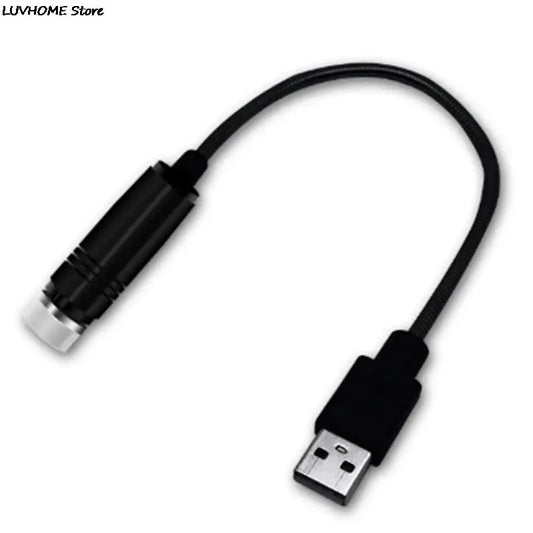
USB Star Projector – Car Roof & Room Starry Light
Regular price From $7.99Regular price -
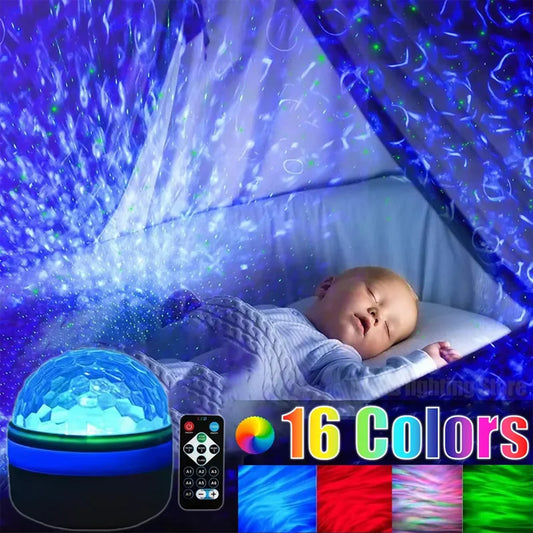
Starry Night Light Projector – Rotating Star & Water Ripple Lamp
Regular price From $9.99Regular price -
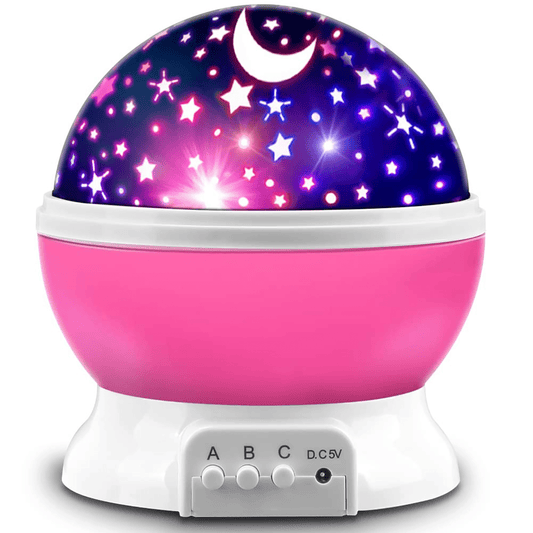
Rotating Star & Moon Projector Night Light for Kids
Regular price $21.99Regular price -
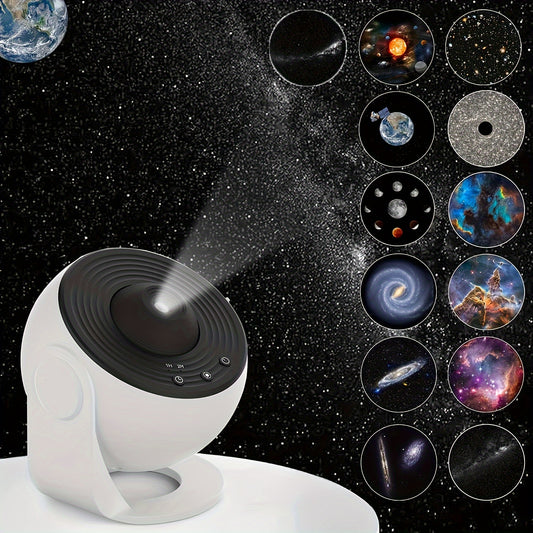
Planetarium Star Projector with 12 Discs – Real Constellations & Planets
Regular price $49.99Regular price




Finding the right star projector night light
Star projectors look alike in product photos, but they behave differently once the lights go out. Some throw a dense field of tiny, sharp points. Others cast larger, softer stars with a moon or a wash of color, and many rotate the whole pattern slowly around the room. Decide which effect you're after and the choice gets much easier.
Laser vs LED stars
Laser star projectors make very small, sharp points, usually green, and they can spread across a large ceiling. LED star lamps shine light through a patterned shade or lens, so the stars are softer and often come in several colors. A lot of people find LED stars gentler for a night light, while laser stars read more like a real night sky from across the room. If you're weighing the two, our lighting guides on the blog cover the tradeoffs in more detail.
What to check before you buy
- Coverage: the farther the lamp sits from the ceiling, the bigger and dimmer the pattern. A nightstand in a standard bedroom is a good starting point.
- Rotation: slow rotation is soothing, but make sure you can switch it off if you'd rather have a still sky.
- Timer: an auto-off timer lets you fall asleep under the stars without leaving them on all night.
- Controls: a remote is worth having if the lamp sits across the room.
- Power: USB star lights can run from a wall adapter, a laptop or a power bank, and some small ones even work in a car.
A star lamp for every room
For a nursery or a child's bedroom, start with our star projectors for kids, which lean toward soft colors and simple controls. Adults who want real constellations instead of a random star field usually prefer a home planetarium projector. If you'd like drifting nebula color along with the stars, browse the galaxy projectors, and for music or sleep sounds with your stars, see the smart star projectors with Bluetooth.
Frequently asked questions
Are star projectors good for sleep?
For many people, yes. A dim, slow star pattern gives your eyes something calm to rest on and replaces a bright overhead light at bedtime. Keep the brightness low, choose warmer colors when you can, and use a timer so the light goes off once you're asleep.
Are star projectors bad for your eyes?
Looking at stars on the ceiling is fine. What you want to avoid is staring into the lens itself, particularly on laser models. Set the projector where nobody, and especially no child, can look straight into it from close range.
Why are the stars on so many star projectors green?
Green is the most common color for laser stars because the human eye is most sensitive to green light, so it looks bright without needing much power. LED star lamps aren't limited to green and often let you pick from several colors.
Do star projectors work on any ceiling?
They look best on a flat, light-colored ceiling in a dark room. Popcorn or darker ceilings still show the stars, just a bit less sharply. Aiming the projector at a corner lets the pattern wrap across the ceiling and two walls.