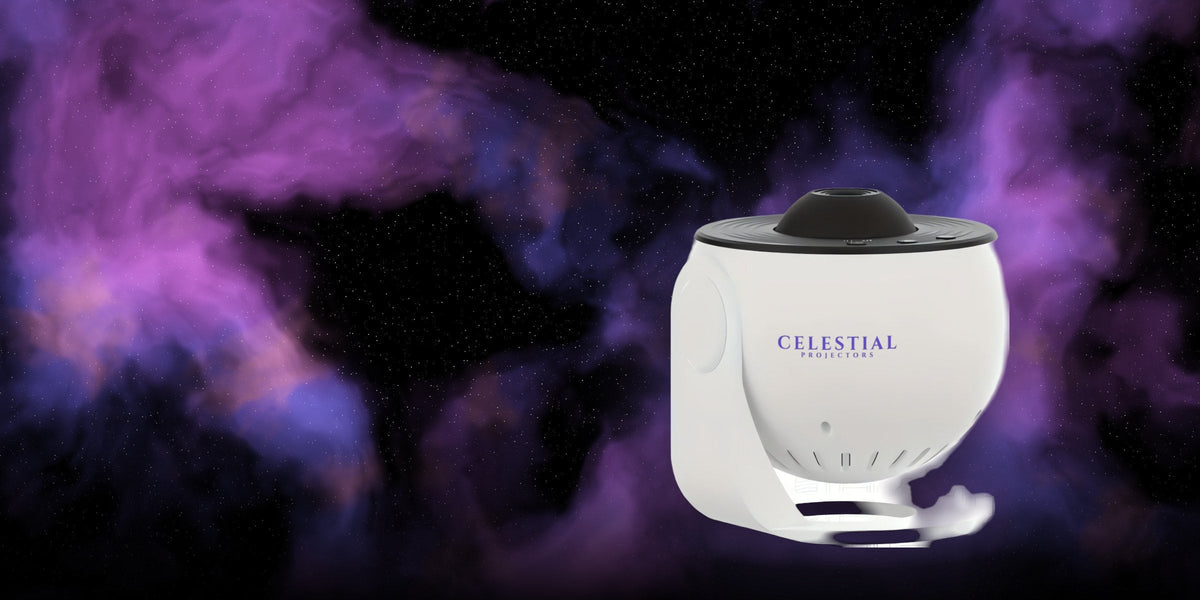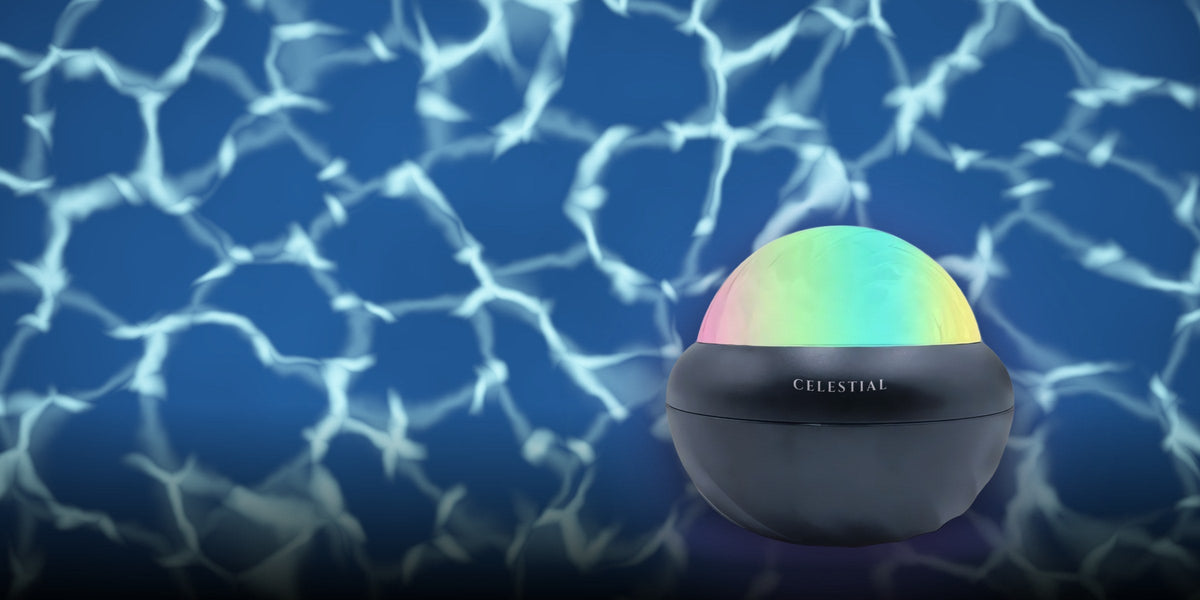
If you've ever lain at the bottom of a swimming pool on a sunny day, you've seen the effect ocean wave projectors are trying to recreate: bright, wobbling lines of light that never quite settle. On a bedroom ceiling, that motion has an unusual quality. It's lively without being busy, and many people find it easier to relax under than a field of colored stars.
Here's how these projectors produce the effect, what it looks like in practice, and the rooms and moments where it works best.
Key takeaways
- Ocean wave projectors imitate the rippling light you see underwater, usually by shining LEDs through a slowly turning textured lens.
- The effect is soft and slow-moving, which suits wind-down routines, reading corners, and calm-down spaces.
- They need a dark room and a fairly smooth, light surface; bright rooms and very large spaces dilute the ripple.
- Some models combine ripples with stars or nebula for variety, and a remote makes switching easy.
- Keep them away from water: a bathroom ripple is lovely, but the projector belongs well clear of the tub and sink.
How the effect works
The real thing
The patterns at the bottom of a pool have a name: caustics. When sunlight passes through a moving water surface, each little wave acts like a lens. Some bend the light together into bright lines; others spread it apart into darker patches. As the waves move, the lines shift and wobble.
The projector's version
An ocean wave projector fakes the moving water. Inside, an LED shines up through a clear, rippled lens or disc that turns slowly. The uneven surface bends the light the same way waves do, focusing some areas into bright bands and leaving others dim. Because the lens rotates, the bands drift and morph across the ceiling.
Color comes from the LEDs themselves. Most ocean projectors offer blues and greens for a classic underwater look, plus warmer or mixed colors. Many also let you change speed, brightness, or the mix of colors. If you'd like a deeper look at lenses and LEDs in general, our explainer on how galaxy projectors work covers the same principles.
What it looks like
Expect a broad, gently moving wash of light rather than sharp detail. In a dark room, the bright ripple lines are clearly defined and the motion is smooth and continuous. The pattern usually covers a large part of the ceiling from a nightstand, with the brightest, crispest ripples nearest the center of the beam.
A few things shape the result:
- Color: deep blue reads as "ocean"; teal and green feel more like a tropical lagoon; warm amber or purple feels less literal and more like mood lighting.
- Speed: slow settings feel like a calm sea; faster ones feel more like a fountain or a party effect.
- Surface: smooth, pale ceilings show crisp ripple lines; textured ceilings blur them into a softer glow.
A note on motion: a few people find any constant movement overhead distracting, and a small number may feel slightly unsettled by it. If that's you, choose the slowest speed, or pick a model that also offers a static or star-only mode.
Our water-ripple options
We carry three projectors with a water ripple effect, each suited to a different need.
| Model | Effects | Power and control | Price | Best for |
|---|---|---|---|---|
| Ocean Wave Projector | Water ripple and stars | USB powered | $9.99 | Trying the effect, small rooms, desks |
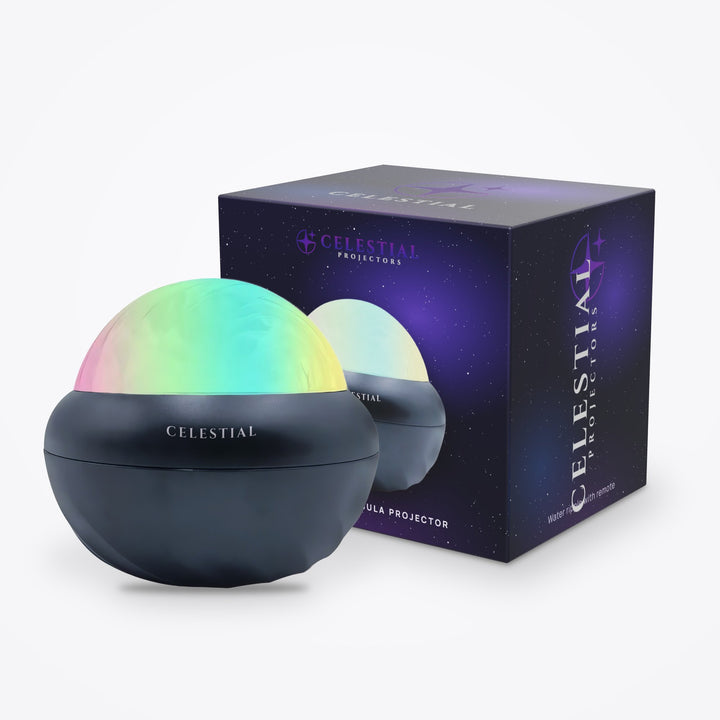
| Ocean Wave & Nebula Projector | Water ripple and nebula | Remote control | $26.99 | Bedrooms, controlling from bed |
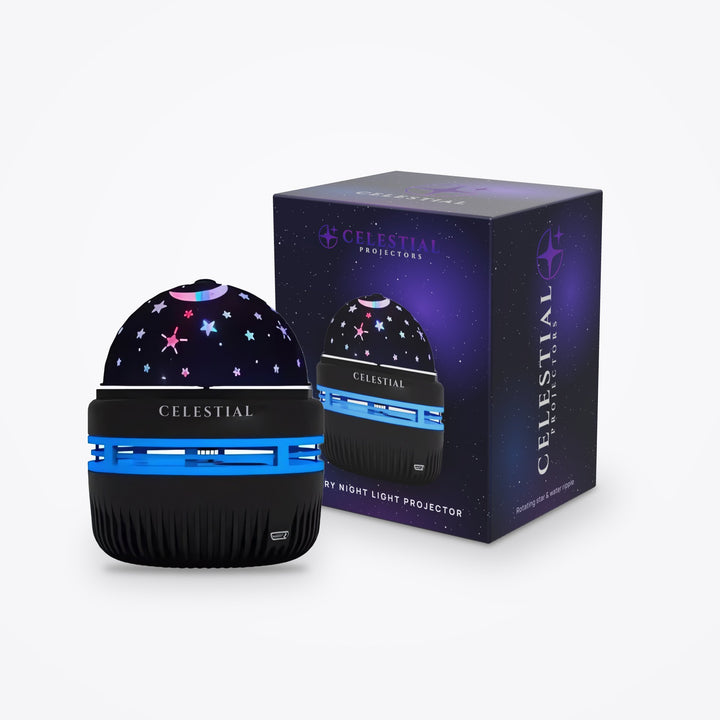
| Starry Night Light Projector | Rotating stars and water ripple | Compact lamp | $9.99 | Kids' rooms, nightstands |
Ocean Wave Projector
The Ocean Wave Projector is the easiest way to try the effect. It runs on USB, so you can power it from a wall charger, a laptop, or a power bank, and it adds stars to the ripple. At $9.99 it's an inexpensive experiment for a desk, a dorm, or a small bedroom.

Ocean Wave & Nebula Projector
The Ocean Wave & Nebula Projector is the bedroom pick. It pairs water ripples with nebula clouds, so you can go from underwater to outer space without changing devices, and the remote means you can do it from bed.

Starry Night Light Projector
The Starry Night Light Projector is a compact lamp that offers both rotating stars and a water ripple. It's a sweet fit for a child's nightstand or a shelf, and a good gift for someone who can't decide between stars and the sea.
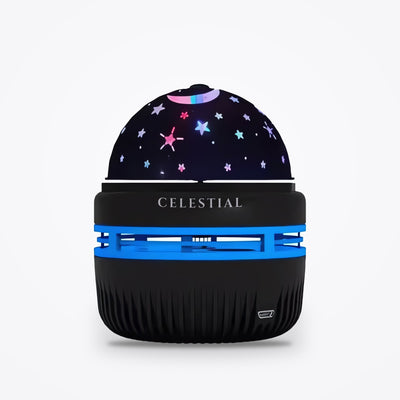
You'll find these and similar lights in our nebula and ocean projectors collection.
What to look for
Ripple projectors are simple devices, so a short checklist covers most of what matters.
- Speed control. This is the most important setting. A ripple that's lovely at a slow drift can feel frantic at full speed, so make sure you can slow it down.
- A single-color option. Cycling colors are fun at parties, but one steady blue or teal is what makes the effect read as water.
- Brightness steps. You'll want it brighter in the early evening and dimmer once your eyes adjust.
- A timer. If it's going in a bedroom, an auto-off timer means it won't run all night.
- A second effect. Stars or nebula alongside the ripple give you a change of scene on nights when you want something stiller.
- Power that suits the spot. USB models are flexible and easy to move; a remote matters more when the projector sits across the room from the bed.
Price is a weaker signal than you might think. The effect comes from a lens and an LED, and an inexpensive model in a dark, bedroom-sized room can look just as convincing as a pricier one. Spend more for convenience features, such as a remote or extra modes, rather than expecting a dramatically better ripple. Our comparison of budget vs premium projectors applies the same thinking across the whole category.
Where they shine
Wind-down in the bedroom
Ripples are a natural fit for the last half hour before sleep. The motion gives your eyes something to rest on without demanding attention. Set a slow speed, a deep blue, and the auto-off timer if your model has one. Many people find this calmer than a cycling galaxy mode.
Reading nooks and corners
Aimed at the wall above a reading chair, a ripple adds a sense of place: a cabin by the lake, a boat deck at dusk. Keep a separate reading lamp for the page itself.
Ocean-themed kids' rooms
For a child who loves sea creatures, a ripple projector turns the ceiling into the surface of the water. It pairs well with blue walls, wave decals, and whale or fish prints. Our kids' bedroom guide has more on picking lights for children.
Calm-down and sensory spaces
Slow, predictable motion is often welcome in a quiet corner. Our guide to gentle lighting for sensory-friendly spaces covers how to keep the effect soft, and the sensory light projectors collection gathers suitable options.
Bath time and spa evenings
A ripple across a bathroom ceiling makes a bath feel like a spa. Safety comes first here: keep the projector and its cable well away from the tub, sink, and anywhere it could get splashed, and never handle it with wet hands. Place it in the doorway or on a dry shelf across the room, aimed in.
Parties and themed events
Turn the speed up and the colors bright and a ripple projector makes a quick under-the-sea backdrop for a birthday or a pool-themed party. See our party lighting guide for layout ideas.
Where they struggle
Ocean wave projectors aren't the right tool everywhere.
- Bright rooms: the ripple relies on contrast between bright bands and dark gaps. Any significant ambient light erases the gaps first.
- Very large rooms: spread over a huge ceiling, the bands get wide and faint. These are best in bedroom-sized spaces.
- Heavily textured ceilings: texture breaks up the fine lines. Try a smooth wall instead.
- Anyone sensitive to motion: as noted above, use slow speeds or a static mode.
Setup tips for a convincing ripple
- Distance: as a rule of thumb, roughly 5 to 8 feet from the surface keeps the ripple lines crisp in a typical bedroom. Closer gives tighter, brighter ripples.
- Angle: pointing straight up gives the most even pattern. A low angle stretches the ripples, which can look like a long, shallow pool.
- Darkness: block streetlight and hallway light; the effect depends on contrast.
- Color: start with a single deep blue. Mixed colors are fun, but a single hue looks most like real water.
Tip: Pair a ripple with a little sound. A low ocean or rain track from a phone or speaker makes the effect far more convincing, and it's a pleasant way to wind down.
Our general guide to setting up a star projector covers distance, angle, and cable tidying in more detail.
Ocean, galaxy or aurora?
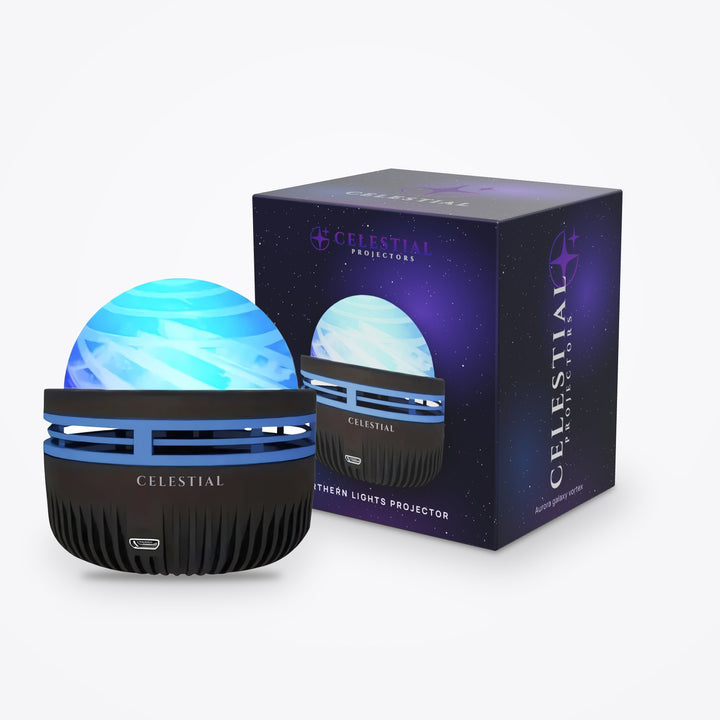
All three are mood lighting, but they feel different. Galaxy projectors fill a room with static color and stars, like a space photo. Aurora projectors sweep wide bands of color slowly across the ceiling; see our aurora projector guide or the Northern Lights Projector. Ocean wave projectors are the most kinetic of the three, with constant, fine movement.
If you can't decide, a combination model like the Ocean Wave & Nebula Projector lets you switch between moods. And if you're comparing categories more broadly, our explainer on starlight vs galaxy projectors vs night lights lays out the differences.
FAQ
How does an ocean wave projector work?
An LED shines through a clear, rippled lens that turns slowly. The uneven surface bends the light into bright and dark bands, much as real waves do with sunlight, and the rotation makes the pattern move across the ceiling.
Is an ocean wave projector good for sleep?
Many people find a slow, blue ripple relaxing as part of a wind-down routine. Use the slowest speed and a timer so it switches off once you're asleep. If you have ongoing sleep problems, talk to your doctor.
Can I use an ocean wave projector in the bathroom?
You can project into a bathroom, but keep the device and its cable well away from water. Place it on a dry shelf or in the doorway, aimed in, and never touch it with wet hands.
Why does my ocean projector look blurry?
Usually the room isn't dark enough, the ceiling is textured, or the projector is too far away. Darken the room, try a smooth wall, move it a little closer, and wipe the lens with a dry microfiber cloth.
Do ocean wave projectors show stars too?
Some do. Our Ocean Wave Projector and Starry Night Light Projector include stars, and the Ocean Wave & Nebula Projector adds nebula clouds. Check each listing for its exact modes.